
2026-09-04 · Jay Thompson
Adjusting Paint Application Techniques At Denver's Elevation
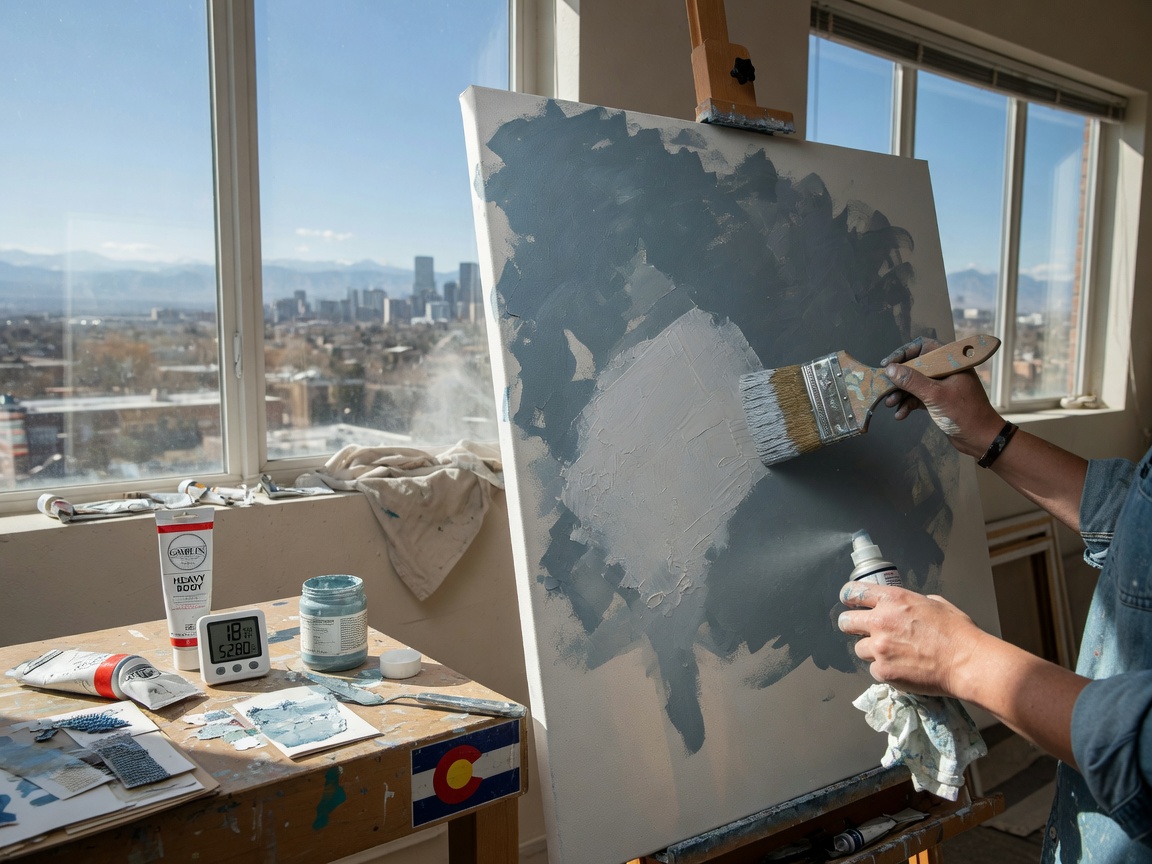
At Denver's 5,280-foot elevation, paint dries 20-30% faster than at sea level because lower air pressure causes solvents to evaporate more quickly, so house painters thin latex formulas by 5-10% with water and apply in smaller 4-by-4-foot sections to maintain a wet edge.
How Elevation Changes Drying Rates in Denver County
Lower atmospheric pressure in Denver County pulls moisture from paint films faster than in Aurora or Lakewood, which sit slightly lower. This creates lap marks on siding in neighborhoods like Highland and LoDo if applicators work too slowly. Painters therefore switch to slower-evaporating acrylics during hot summer afternoons when temperatures climb above 85 degrees and switch back to standard formulas once afternoon thunderstorms drop humidity. In older brick homes common in Capitol Hill and Five Points, the same rapid dry time means primer must be back-rolled within eight minutes instead of the fifteen minutes typical at lower elevations. Crews also carry extra buckets of water to keep brushes and rollers from skinning over between passes.
Adjusting Roller and Brush Techniques for Local Conditions
House painters working in RiNo and Baker reduce roller pressure by roughly one-third to prevent air bubbles that expand and pop as the paint skins rapidly at elevation. They use 3/8-inch nap rollers on stucco common in Washington Park and Park Hill rather than the 1/2-inch nap used at lower elevations, because thicker naps hold too much material that then flashes dry unevenly. Brush work on trim in Cherry Creek and Montclair homes requires adding a paint extender at a 4-ounce-per-gallon rate during cold winter months when indoor heating drops relative humidity below 20%. These changes keep coverage consistent without extra coats. Crews working near Union Station and Coors Field also factor in wind gusts that accelerate surface drying on exposed elevations.
Timing Work Around Semi-Arid Weather Patterns
Semi-arid conditions with frequent afternoon thunderstorms dictate that exterior work in Stapleton and Sunnyside begins no later than 7am so the first coat can cure before 2pm storms arrive. Interior painting in homes near Denver Botanic Gardens and City Park can continue later because controlled indoor climates reduce the elevation-driven dry rate. During winter months when temperatures drop below freezing at night, painters wait until surfaces reach 50 degrees before starting, which often means delaying starts until late morning. These patterns directly affect how many square feet a two-person crew finishes in one day compared with jobs in Centennial or Lakewood.
Linking Elevation Adjustments to Long-Term Results
Proper technique adjustments at elevation prevent premature peeling on fences and decks that face intense UV at this altitude. Readers planning exterior work can review the steps in Repairing Paint Damage After A Colorado Hail Storm and Refreshing Fences And Sheds Before Denver's First Snow. For interior surfaces, see the methods described in Interior Painting and Exterior Painting. Jay's Painting LLC applies these elevation-specific methods Monday through Saturday from 7am to 5pm on projects throughout Denver County.