
2026-09-04 · Jay Thompson
Choosing Fade-Resistant Colors For South-Facing Homes In Denver
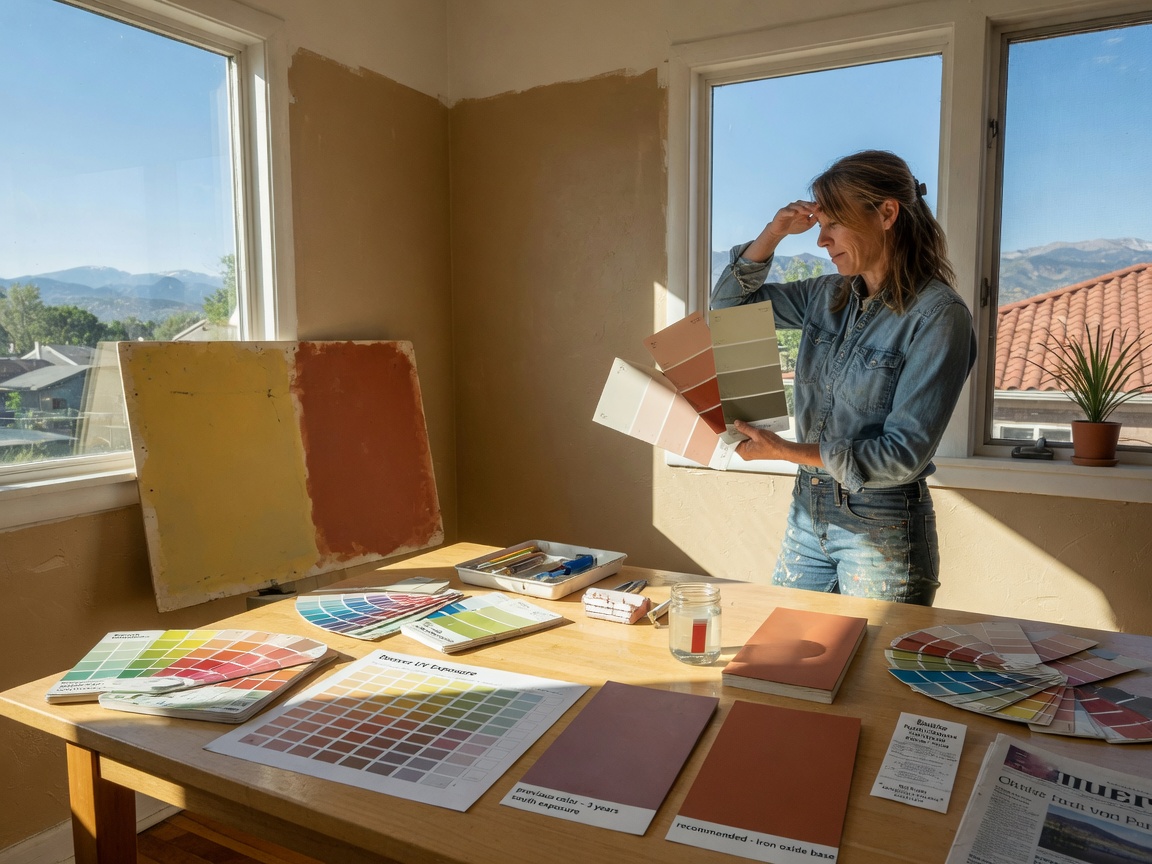
In Denver's semi-arid climate with hot summers and intense high-elevation UV, south-facing homes retain color best when painted in medium-tone shades using 100% acrylic latex with built-in UV inhibitors, which typically maintain appearance for 8-12 years before noticeable shift occurs.
Denver Sun and Elevation Effects on South Walls
South-facing surfaces in neighborhoods such as Park Hill and Stapleton receive direct sunlight for most daylight hours, especially during summer when temperatures climb and afternoon thunderstorms provide brief but intense moisture cycles. At Denver's elevation the thinner atmosphere lets more UV through than in nearby Aurora or Lakewood, breaking down pigments faster on wood siding and stucco common to bungalows and mid-century homes. This exposure pattern means lighter pastels and bright reds lose saturation first while earth tones and grays with carbon-black or iron-oxide pigments hold longer. Homeowners in Five Points and Baker often see the difference after one full summer when south walls are compared to shaded north sides.
Selecting Pigments and LRV Ranges
Focus on paints labeled exterior grade with infrared-reflective or UV-stabilized pigments rather than standard consumer lines. Medium light reflectance values between 25 and 45 reduce heat buildup while still offering fade resistance; very dark colors under 20 LRV absorb too much heat and can crack on older Denver stock, while whites above 80 show chalking within a few seasons. In Capitol Hill and RiNo, where many homes have original wood trim, owners report best results with colors such as warm greiges and muted olives that incorporate multiple iron-oxide pigments. Always request the specific color's technical data sheet showing accelerated weathering test results before committing to a full exterior painting project.
Surface Preparation for Local Conditions
Proper prep matters more than color choice alone when working against Denver's freeze-thaw cycles and occasional hail. Scrape loose paint, wash with a mild detergent solution to remove dust from the dry climate, and apply a quality acrylic primer on bare wood or previously painted surfaces. South walls in Montclair and Sunnyside often need extra attention at joints and under eaves where afternoon storms drive moisture. Pressure washing and surface preparation removes the fine grit that can interfere with adhesion before any new color goes on.
Application Techniques at Elevation
Apply paint when temperatures stay between 50 and 85 degrees and humidity is low, typical spring and fall windows in Denver County. Use two thin coats rather than one heavy coat to avoid runs on vertical surfaces and to build even film thickness that resists UV penetration. Adjusting paint application techniques at Denver's elevation explains how lower air density affects drying times and why back-brushing into siding grooves helps. Homeowners in Washington Park and Highland who follow these steps see fewer touch-ups after the first winter.
Ongoing Care and Expected Lifespan
Inspect south-facing walls each spring for chalking or color shift, especially after the hot months. Light cleaning with a soft brush and water removes pollen and dust without stripping protective resins. In most Denver neighborhoods, quality exterior systems last 8-12 years before a maintenance coat is needed, though trim and doors facing south may require attention sooner. Exterior painting performed with the right color and prep keeps homes looking consistent across seasons without frequent full repaints.