
2026-09-04 · Jay Thompson
Painting Garage Interiors During Denver's Milder Months
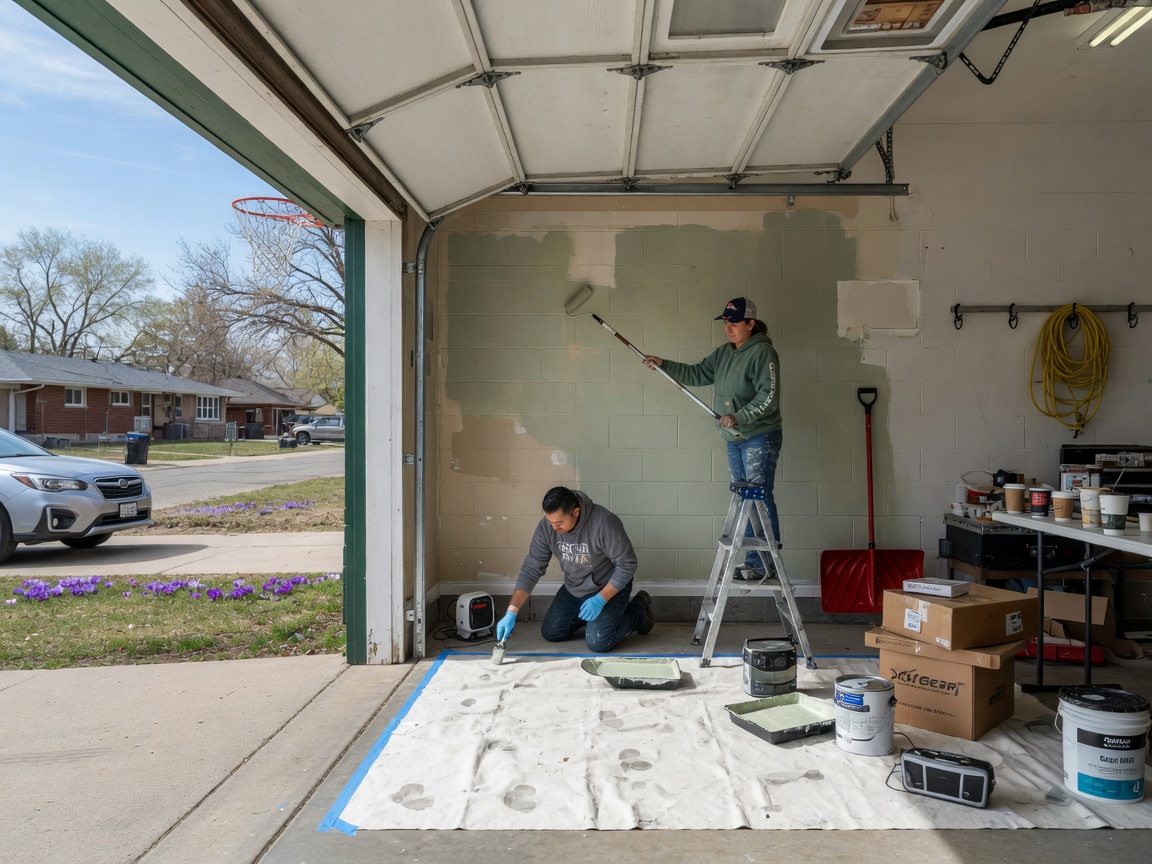
Painting garage interiors in Denver succeeds most reliably during the milder months of April through May and September through October, when daytime highs typically range from 55 to 75 degrees and overnight lows stay above freezing. These windows avoid the intense heat and afternoon thunderstorms of summer as well as the sub-zero stretches common in winter. Homeowners in neighborhoods such as Capitol Hill and RiNo often schedule work then because older brick and frame garages from the early 1900s absorb moisture differently once temperatures stabilize.
Timing Around Denver Weather Patterns
Spring and fall bring fewer temperature swings that cause fresh paint to blister or cure unevenly on concrete block and drywall walls common in Denver County garages. Afternoon thunderstorms can raise humidity quickly, so crews watch forecasts and stop work if rain threatens within four hours of application. In nearby Aurora and Lakewood, similar patterns hold, but Centennial sees slightly drier conditions that sometimes allow an extra week or two of workable days. Homeowners notice that paint applied in these windows lasts longer before chalking appears on south-facing walls exposed to intense high-altitude sun.
Surface Preparation Specific to Local Conditions
Garages in Washington Park and Park Hill frequently show efflorescence on concrete from the area's expansive clay soils and occasional spring snowmelt. Proper cleaning removes this before primer goes down. Pressure washing followed by a masonry conditioner prevents future peeling. Many two-car garages measure 20 by 24 feet, requiring careful masking of overhead doors and electrical panels. Checking for hidden moisture before coating becomes essential; the linked guide on spotting hidden moisture issues before repainting Denver basements explains similar inspection steps that apply to attached garages.
Paint Selection and Application Details
Latex acrylic paints formulated for interior masonry perform best when applied between 50 and 85 degrees. Two coats over a quality primer typically cover the 400 to 600 square feet of wall surface found in a standard Denver garage. Bold colors chosen for better light reflection help offset the limited natural light in many older structures. Application usually takes two to three days once prep is complete, allowing full cure before vehicles return. Residents in Five Points and Baker often request low-VOC formulas because attached garages share air with living spaces.
Ongoing Care After the Project
Once painted, garage interiors in Sunnyside and Montclair benefit from seasonal checks for cracks caused by freeze-thaw cycles. Touch-up kits kept on hand address small chips from bicycles or lawn equipment. Scheduling follow-up inspections every 18 to 24 months keeps surfaces looking fresh. For broader interior projects, the interior painting service page outlines how the same crew handles connected living areas with matching finishes. This approach keeps the entire home consistent without rushing work during extreme weather.