
2026-09-04 · Jay Thompson
How Denver's Dry Climate Changes Interior Paint Selection
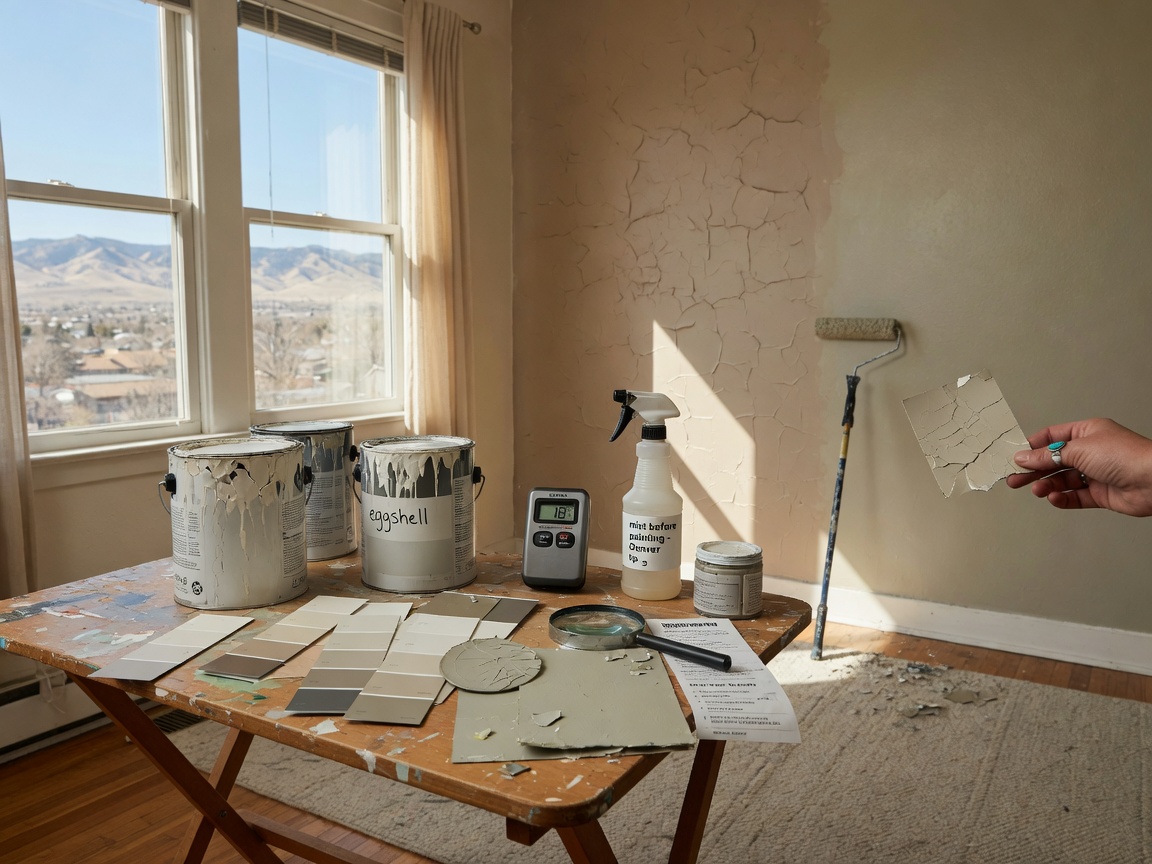
Denver's typical relative humidity below 30 percent in winter months requires interior paints formulated with higher elasticity to avoid cracking on walls and trim. Standard acrylic latex formulas often fail here because they cure too quickly and lose flexibility, leading to visible checking within two to three years on older plaster in 1920s Capitol Hill homes. Instead, select 100 percent acrylic paints labeled for low-humidity environments that maintain a 15 to 20 percent elongation rating after full cure.
Low Humidity Effects on Paint Adhesion
Dry air in Denver County pulls moisture from wet paint films within minutes, creating a skin that traps solvents and weakens the bond to drywall or wood. In homes built before 1960 in Five Points and Baker, this often shows as peeling at corners where temperature differentials reach 40 degrees between day and night. Painters counter this by adding 5 to 10 percent acrylic conditioner to extend open time, allowing the paint to level before the surface skins over. The same condition affects ceiling applications in 1970s ranch homes, where popcorn textures absorb moisture unevenly and create patchy sheen.
Frequent afternoon thunderstorms add brief spikes in moisture that can re-soften partially cured paint, so application windows close by 2 pm on summer days. This pattern repeats across Washington Park and Park Hill, where south-facing rooms see the strongest effect. Interior Painting crews adjust by using paints with slower-evaporating coalescents that remain workable for 45 to 60 minutes even at 15 percent humidity.
Selecting Paints with Proper Binders
Oil-modified alkyd paints perform poorly in Denver's dry climate because they require ambient moisture to cure fully and instead form a brittle film that cracks along trim joints within 18 months. Switch to high-quality 100 percent acrylic latex with a minimum 45 percent resin solids content for better long-term flexibility. In Stapleton and Montclair homes with forced-air heating that further lowers indoor humidity to 20 percent, these paints resist the micro-movement of wood trim caused by seasonal swings. Look for labels specifying suitability for arid climates and test adhesion on a small patch before committing to full rooms.
Low-VOC options still work when they include acrylic polymers designed for low-humidity cure, avoiding the ammonia smell that lingers in tightly sealed LoDo lofts. Avoid vinyl-acrylic blends that cost less but lose elasticity faster under Denver's intense UV through large south windows. Adjusting Paint Application Techniques At Denver's Elevation covers the related elevation impacts on viscosity that compound these humidity issues.
Accounting for Temperature Swings
Winter lows near 10 degrees and summer highs above 90 degrees create substrate movement that standard flat paints cannot accommodate without alligatoring. Choose satin or eggshell sheens with elastomeric additives rated for 25 to 30 percent elongation to bridge hairline cracks that appear in drywall seams during cold snaps. In Cherry Creek and Sunnyside properties with radiant floor heating, the constant low-level warmth accelerates curing and demands paints that retain moisture longer during application.
Test patches applied in the actual room reveal whether the chosen product skins too fast; if brush marks remain visible after 30 minutes, add the manufacturer-recommended additive rather than thinning with water. This approach prevents the lap marks common on large walls in Highland bungalows where afternoon light highlights every imperfection.
Practical Selection Tips for Denver Interiors
Start with a primer formulated for low-humidity adhesion, such as a stain-blocking acrylic that dries to a hard film in under two hours. Follow with two coats of the selected topcoat, sanding lightly between coats to remove any raised grain caused by rapid surface drying. In RiNo lofts with concrete block walls, this sequence prevents the chalking that occurs when moisture escapes too quickly from the substrate. Schedule work between 8 am and 1 pm during summer to stay ahead of thunderstorm humidity spikes, matching the Mon–Sat 7am–5pm availability typical for local crews.